
Mangrove Research at EGU26
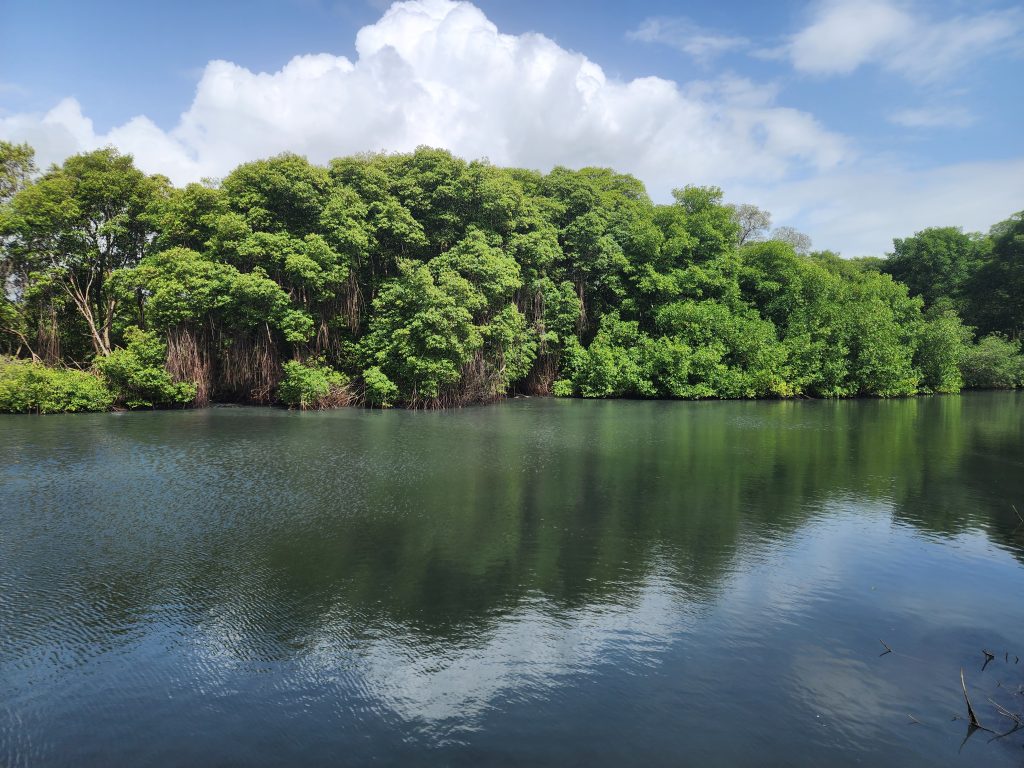
Mangrove ecosystems are increasingly being recognized as suitable Nature-based Solutions (NbS) to issues faced along shorelines and provide an avenue to reduce impending climate risk and build coastal resilience in SIDS. They can reduce wave energy and associated impacts, stabilize shorelines through sediment trapping, and in some cases facilitating accretion rates that may keep pace with sea-level rise. As a result, mangroves are increasingly being considered as a viable component of coastal flood mitigation and climate adaptation strategies. While the benefits of mangroves are well established, important uncertainties remain regarding how much protection they provide and how this protection varies across different ecological and environmental conditions.
These questions formed the basis of two abstracts and poster contributions from members of the Influence team presented under the session “Nature-based coastal solutions: integrating geoscience, engineering, and societal perspectives on successes, failures, and future uncertainties” at the European Geosciences Union General Assembly 2026 (EGU26). Topics within this session’s theme encompassed designing nature-based solutions, restoration, the use of remote sensing and modelling tools to derive answers for ecological variability and long-term resilience.
Ecological Variability and Mangrove Effectiveness
The first contribution, presented by Sarita Emmanuel, focused on the ecological factors that influence the protective functions of mangrove forests. Her work highlighted that mangroves do not provide a fixed level of coastal protection, as their effectiveness varies with species composition, structural characteristics and hydro-geomorphological conditions. The poster focused on identifying key mangrove traits and understanding how these physically affect the hydrodynamic processes, providing a more holistic assessment of mangroves as Nature-based Solutions.
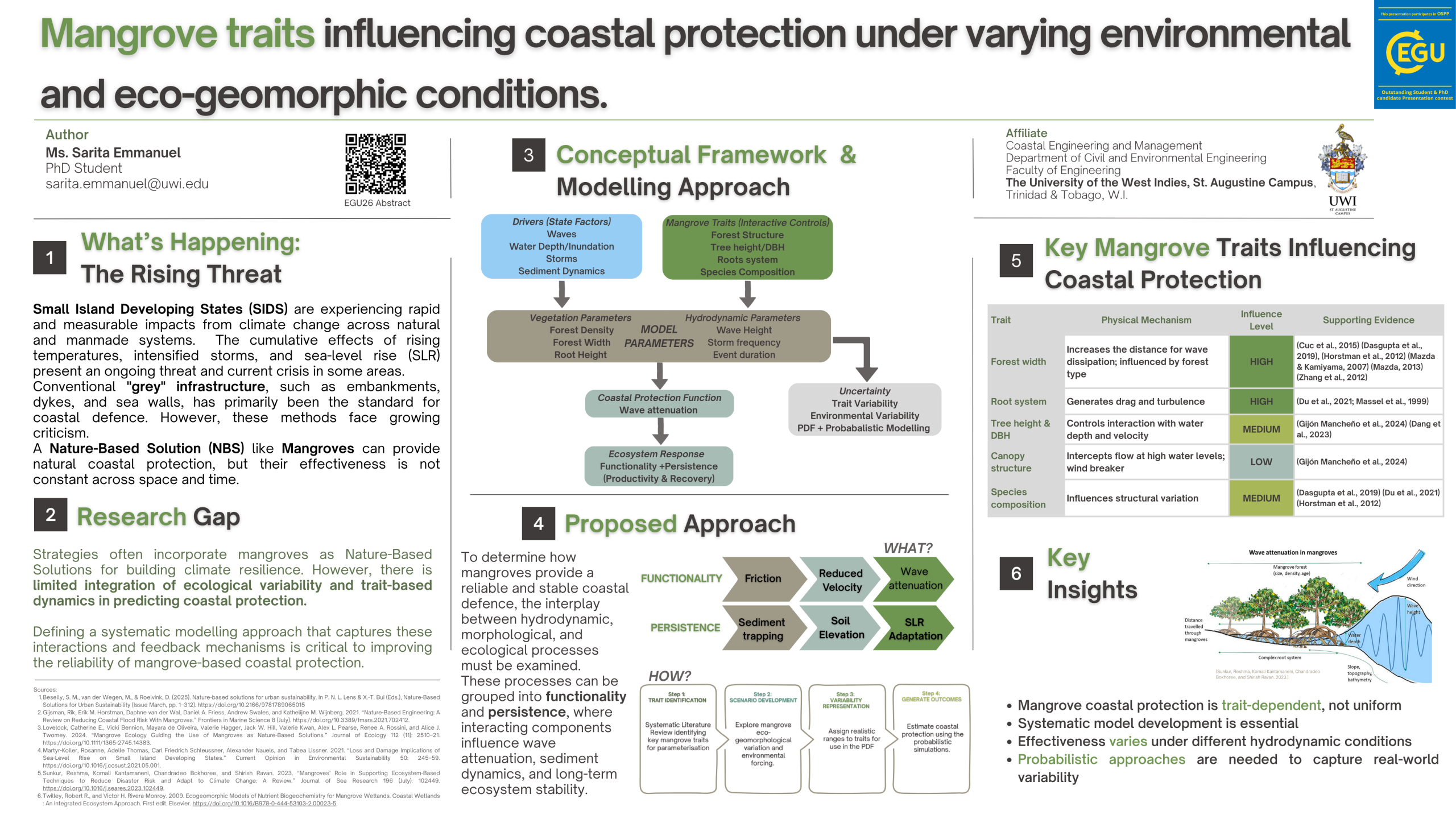
📄 Download Poster | 📖 View Abstract
Quantifying Mangrove Contributions to Flood Mitigation
Complementing this ecological perspective, the second contribution, presented by Andrew Williams, focused on the field observations and numerical modelling required to quantify the role of mangroves in mitigating coastal compound flooding. The work highlighted the challenges of assessing Nature-based Solutions in data-sparse Small Island Developing States and explored how field monitoring techniques, including weather stations, water-level loggers, camera systems, satellite imagery and terrestrial LiDAR scanning, can support the development of compound flood models. Together, these datasets improve the representation of mangrove characteristics and hydrodynamic processes, leading to a more holistic assessments of their contribution to coastal flood mitigation.
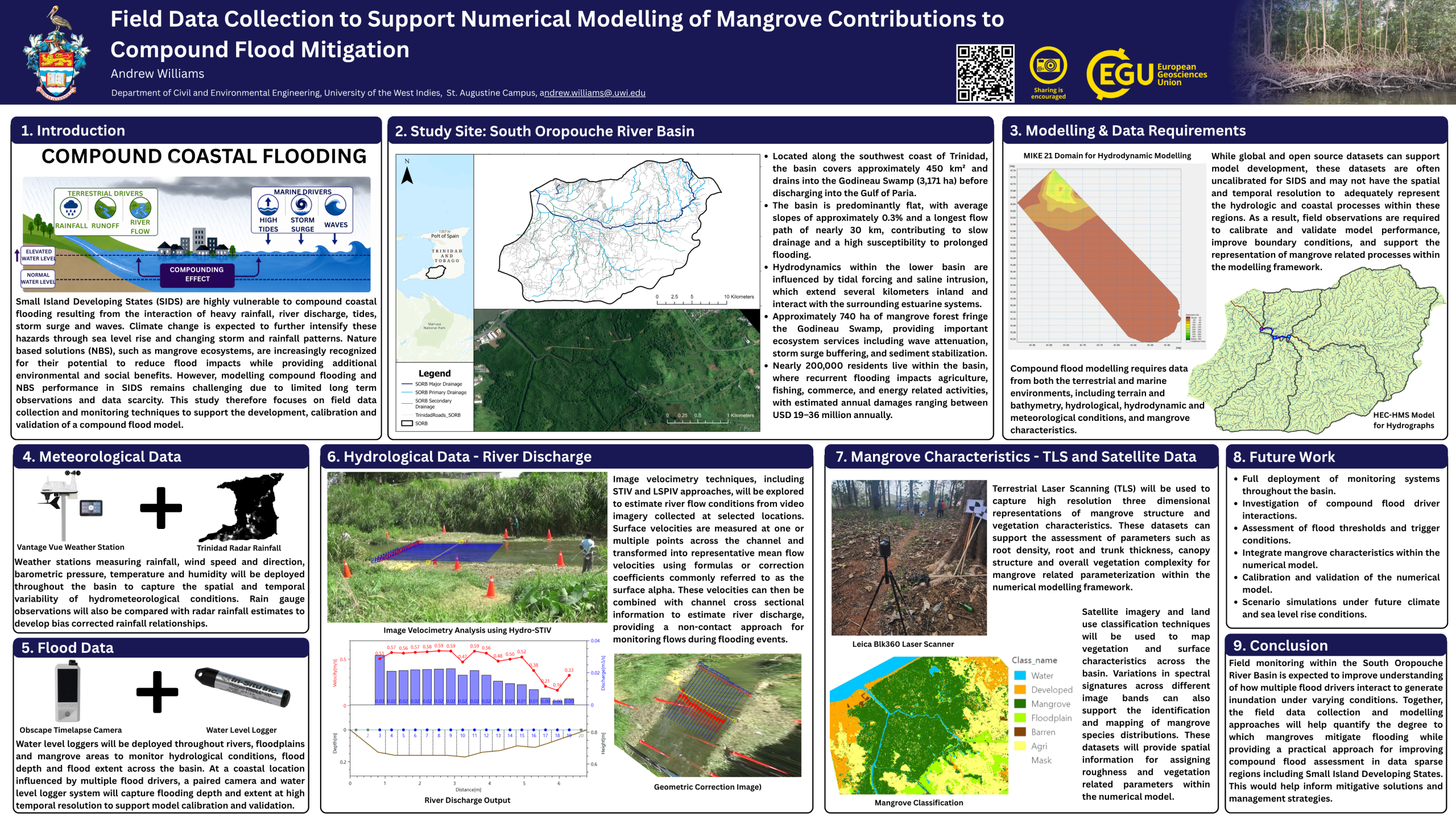
📄 Download Poster | 📖 View Abstract